Royal Oak Skeleton Perpetual Calendar
2016 - 18k Rose Gold
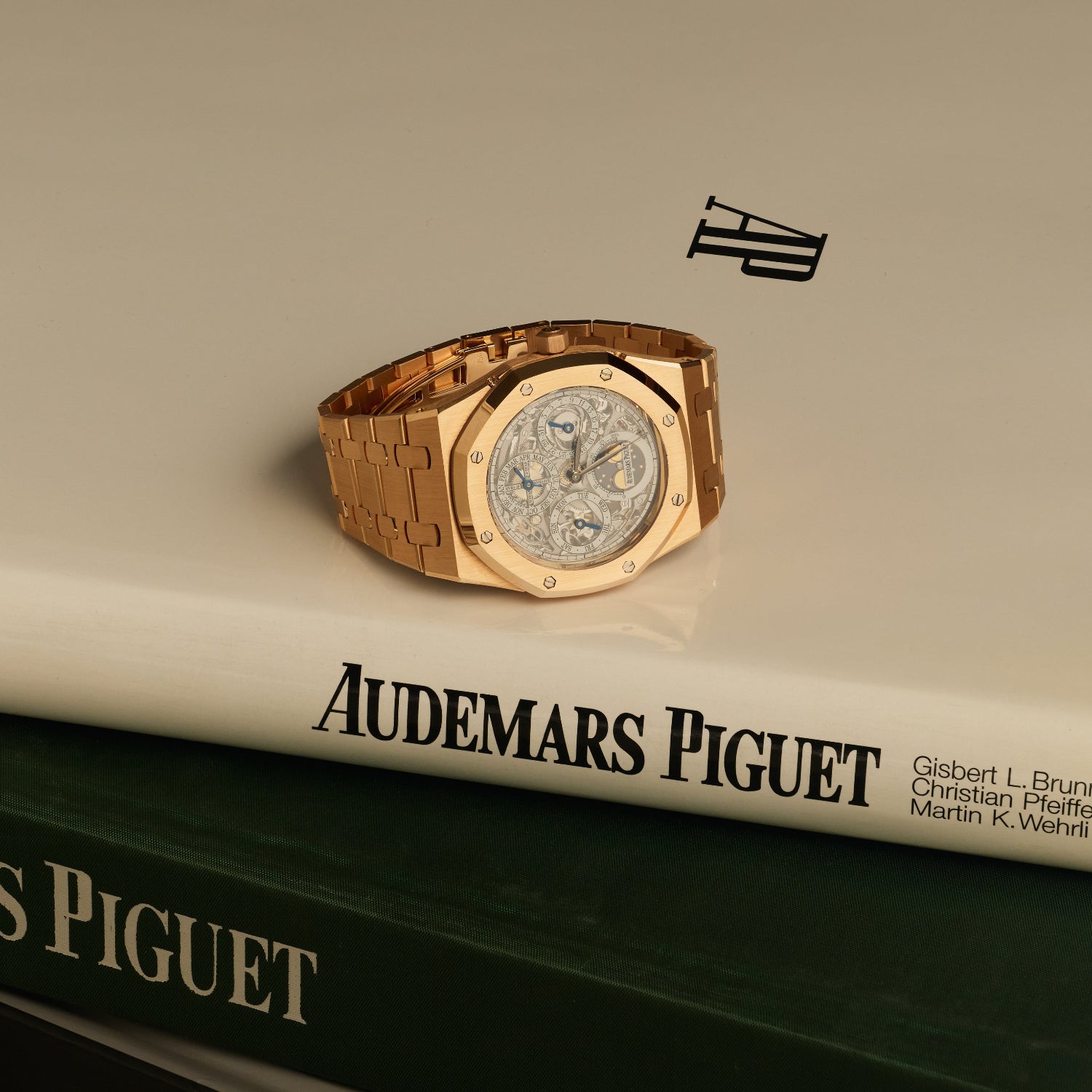
Few watches unite architectural design and mechanical poetry as convincingly as the Royal Oak Perpetual Calendar Skeleton in 18k Rose Gold.
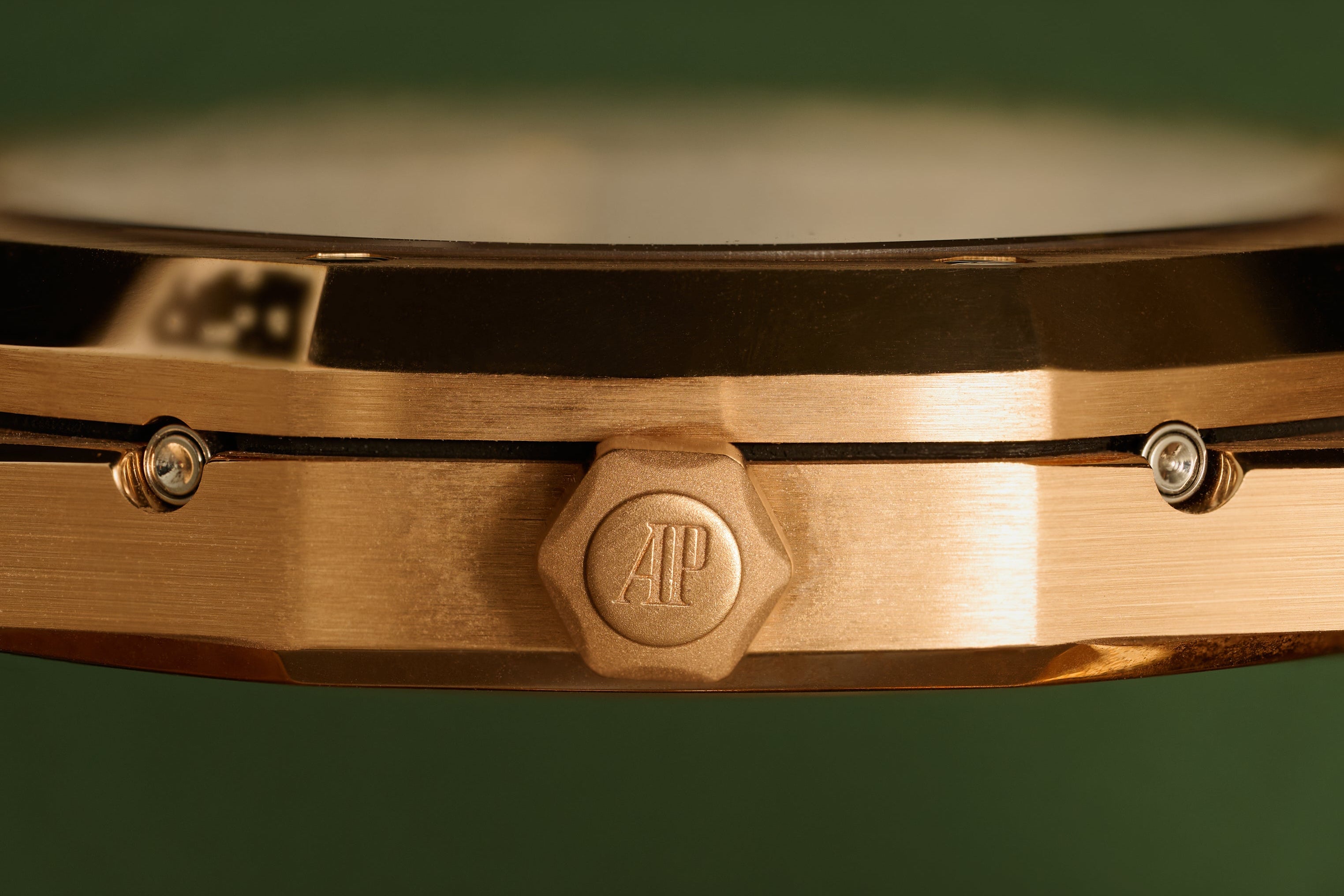
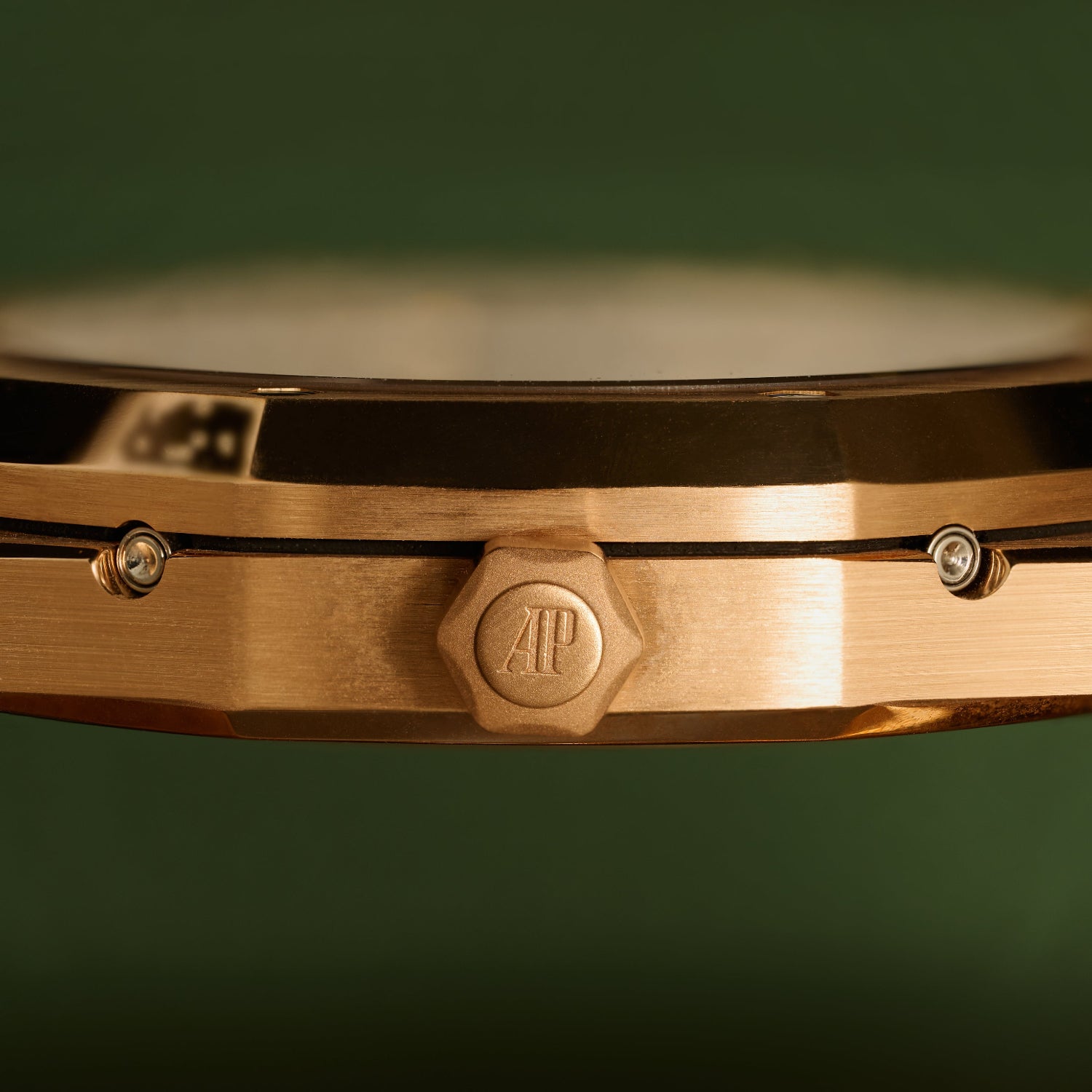
Originally conceived within the lineage of the legendary ultra-thin perpetual calendars of Le Brassus, this reference represents one of the purest expressions of complicated Royal Oak watchmaking. The 39mm case, sculpted in warm Rose Gold, balances sharp geometry with refined finishing - satin-brushed surfaces contrasted by mirror-polished bevels, all framed by the unmistakable octagonal bezel.
The true spectacle lies beneath the sapphire crystal.
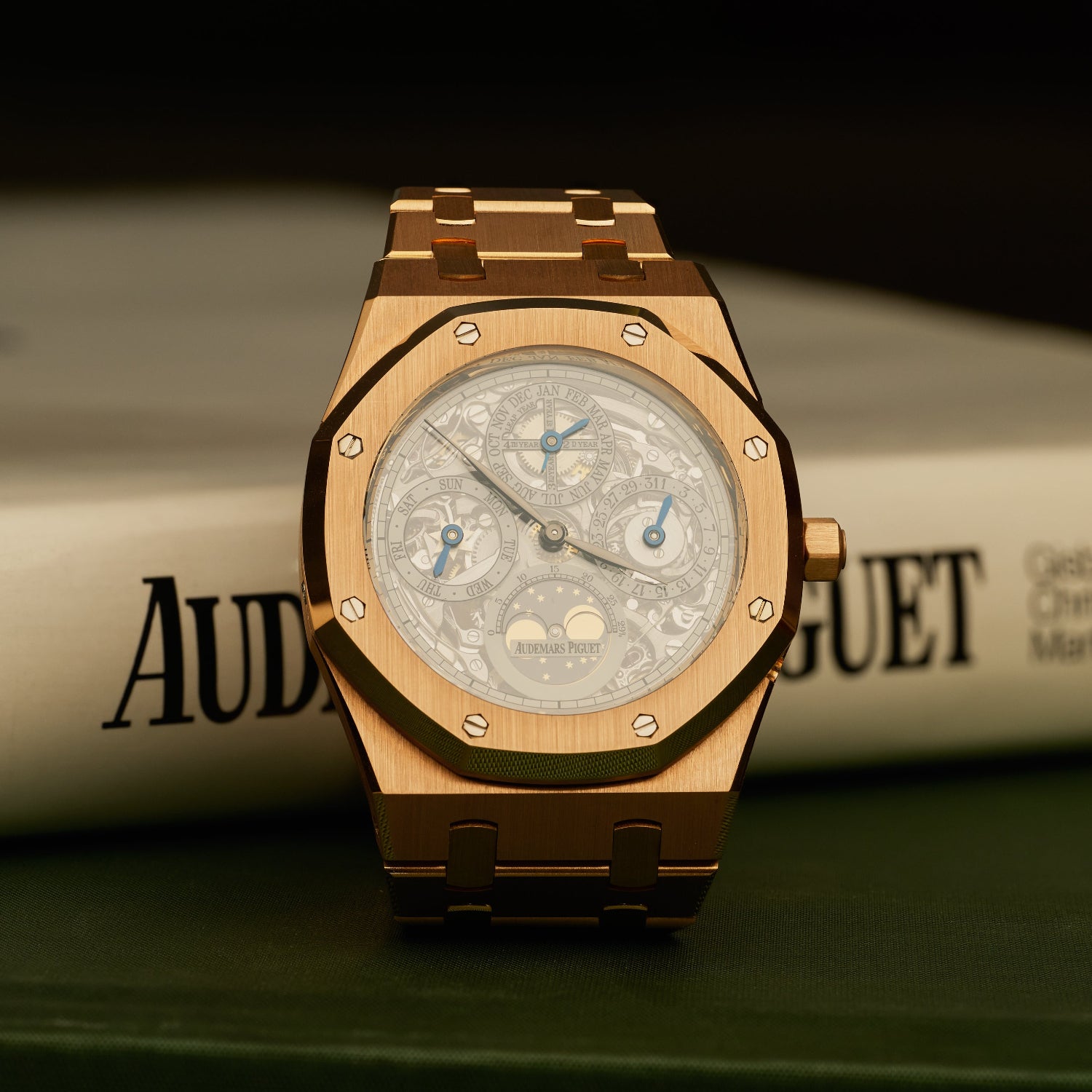
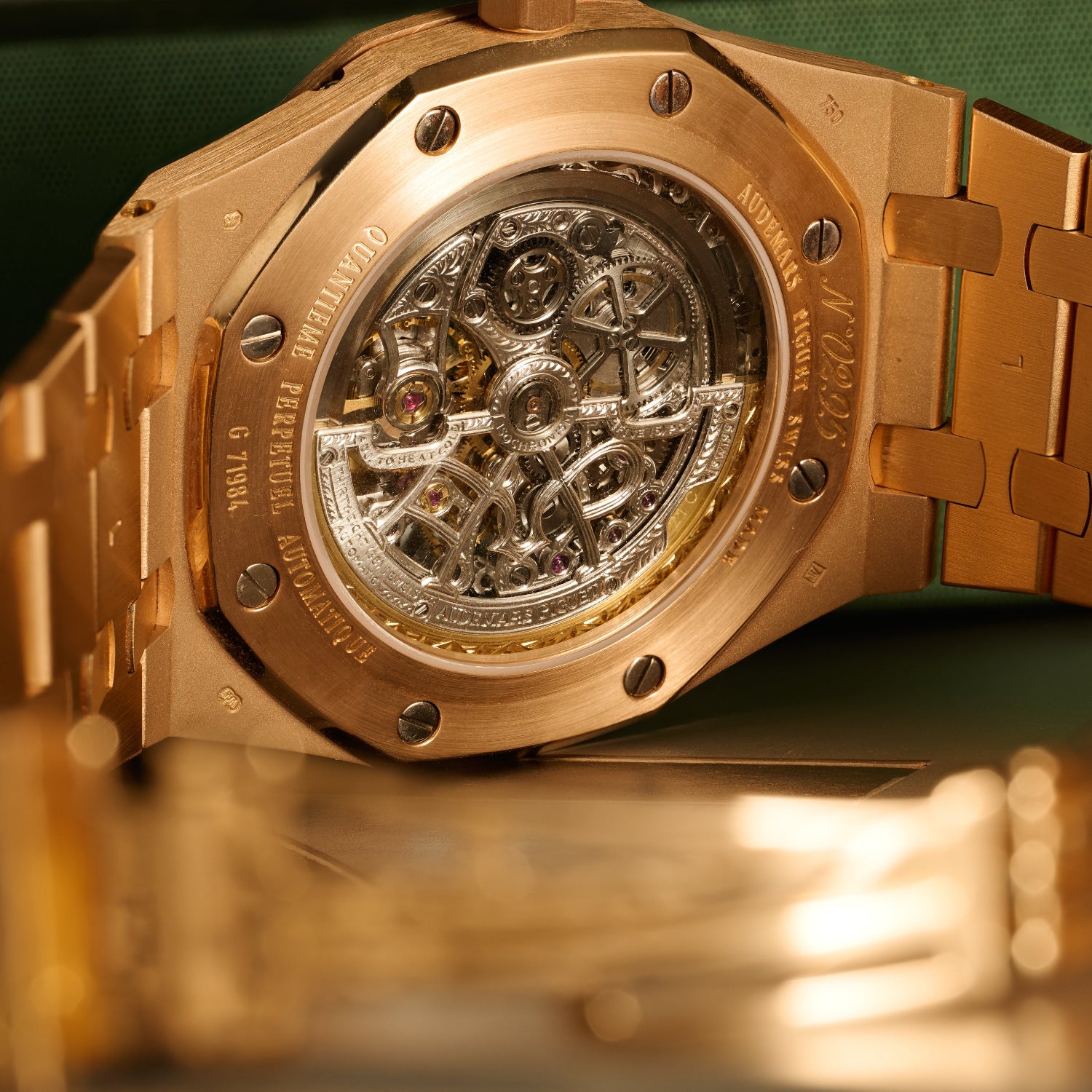
The openworked dial reveals the legendary calibre 2120/2802 - one of the thinnest automatic perpetual calendar movements ever produced. Its grey-toned skeletonized architecture forms the dial itself, allowing the wearer to observe the perpetual calendar mechanism in motion: day, date, month, leap year, and moonphase displayed in harmonious symmetry.
White matte counters contrast elegantly against the movement’s open structure, while the Rose Gold hands and applied elements provide warmth and depth. The result is both technically complex and visually serene - a rare balance achieved only by the finest manufactures.
In Rose Gold, the Royal Oak Perpetual Calendar Skeleton takes on an entirely different character. The warmth of the metal softens the industrial sharpness of the design, creating a timepiece that is both powerful and refined - unmistakably Royal Oak, yet undeniably haute horlogerie.
Produced in limited quantities and discontinued, this reference has become increasingly sought after among collectors who value the thinness, purity, and mechanical integrity of the 2120 generation - a lineage now closed.
This is not merely a Royal Oak.
It is a statement of legacy, craftsmanship, and timeless mechanical intelligence.
Technical Information
Case diameter:
39 mm
Case Material:
18k Rose Gold
Movement:
Automatic, 2120/2802 SQ
Strap:
Integrated Royal Oak bracelet in 18k Rose Gold
Country of Manufacture:
Switzerland
Color:
Skeletonized
ABOUT
AUDEMARS PIGUET
The Spirit of Le Brassus
Founded in 1875 in the quiet village of Le Brassus in Switzerland’s Vallée de Joux by Jules Louis Audemars and Edward Auguste Piguet, Audemars Piguet has remained independent for nearly 150 years — a rare continuity in modern haute horlogerie. From its earliest days, the manufacture was devoted to crafting complicated timepieces, blending technical ingenuity with aesthetic refinement.
Rooted in the landscapes that shaped it, Audemars Piguet carries the pioneering spirit of the Vallée de Joux — where isolation fostered innovation and mastery was passed from generation to generation.
A Legacy of Bold Innovation
Audemars Piguet has never followed convention; it has consistently redefined it. While deeply respectful of traditional craftsmanship, the brand has repeatedly challenged the codes of watch design and mechanical construction.
This spirit culminated in 1972 with the introduction of the Royal Oak, a revolutionary timepiece that transformed the industry. Crafted in stainless steel yet finished to haute horlogerie standards, its architectural case, integrated bracelet, and exposed screws established a new category — the luxury sports watch — and forever altered the perception of modern watchmaking.
Mastery of Complications
Beyond its iconic designs, Audemars Piguet has long been celebrated for its technical virtuosity. The manufacture has produced perpetual calendars, minute repeaters, split-seconds chronographs, and ultra-thin movements that stand among the most sophisticated creations in contemporary horology.
Each complication is conceived and assembled within the manufacture, reflecting a philosophy that mechanical complexity must coexist with clarity, reliability, and enduring beauty.
Craftsmanship Without Compromise
At the heart of Audemars Piguet lies an unwavering dedication to hand-finishing and artisanal excellence. Movements are decorated with meticulous anglage, Geneva stripes, circular graining, and mirror-polished components — techniques that demand patience and mastery.
Cases and bracelets, whether in steel, gold, titanium, or ceramic, undergo elaborate finishing processes to achieve their distinctive interplay of satin brushing and polished surfaces. This attention to detail ensures that every watch carries both technical integrity and sculptural presence.
Independence and Vision
As one of the last great family-owned Swiss watch manufactures, Audemars Piguet stands as a symbol of creative freedom and long-term vision. Its independence allows it to take risks, explore new materials, and reinterpret classical complications with contemporary boldness.
An Audemars Piguet timepiece is more than an instrument of time — it is a statement of character. It embodies heritage and innovation, tradition and disruption, discipline and daring. It is a watch created not merely to measure time, but to shape it.