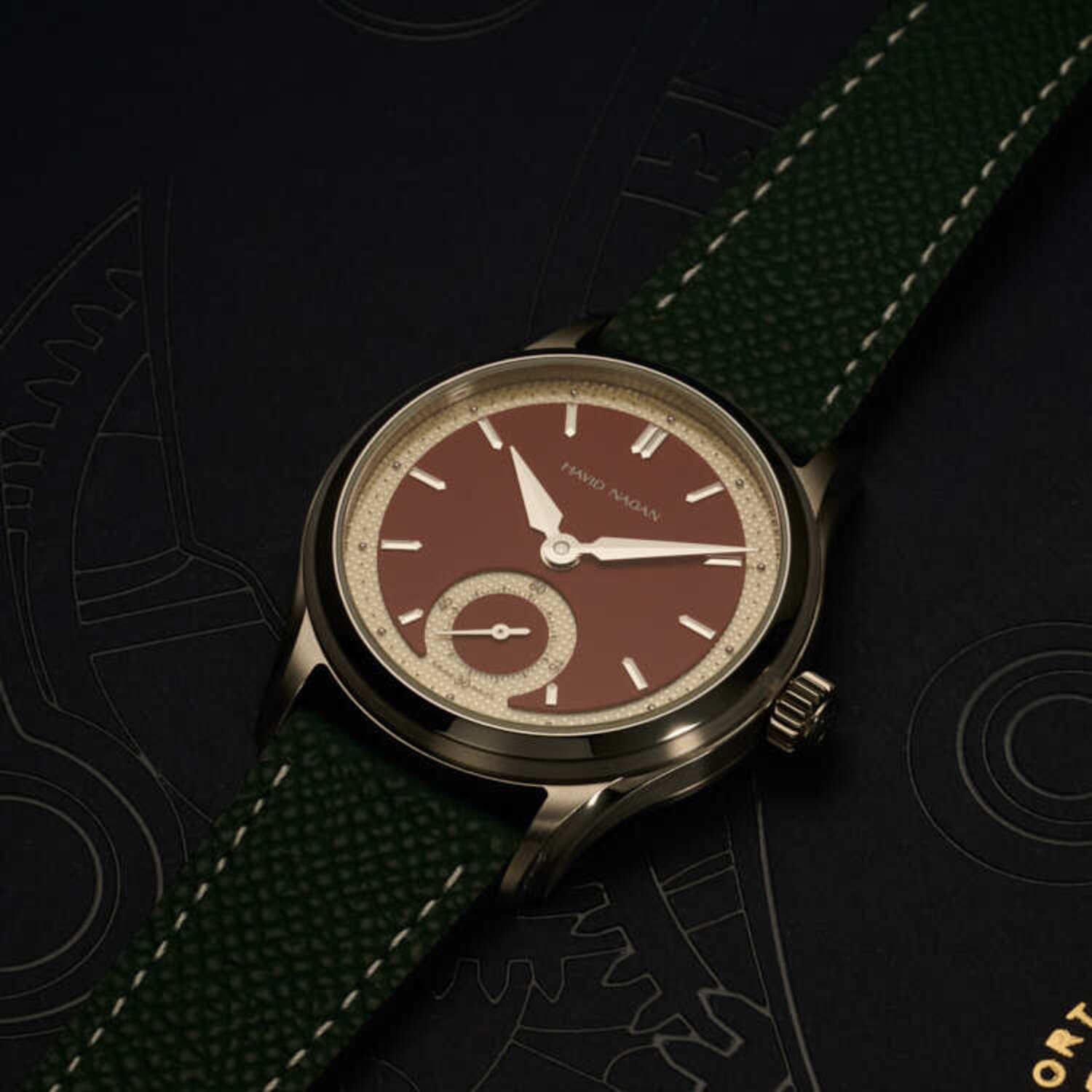
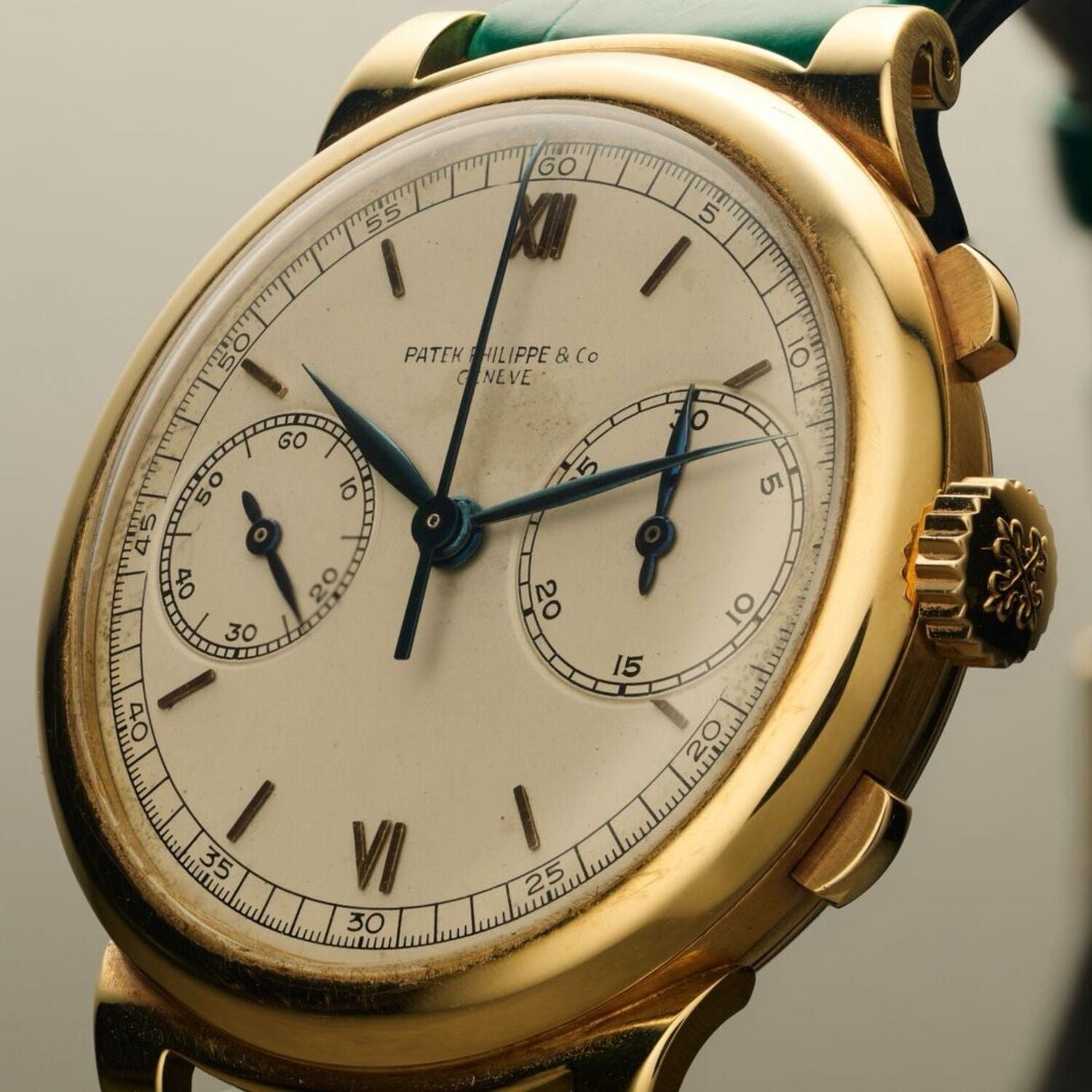
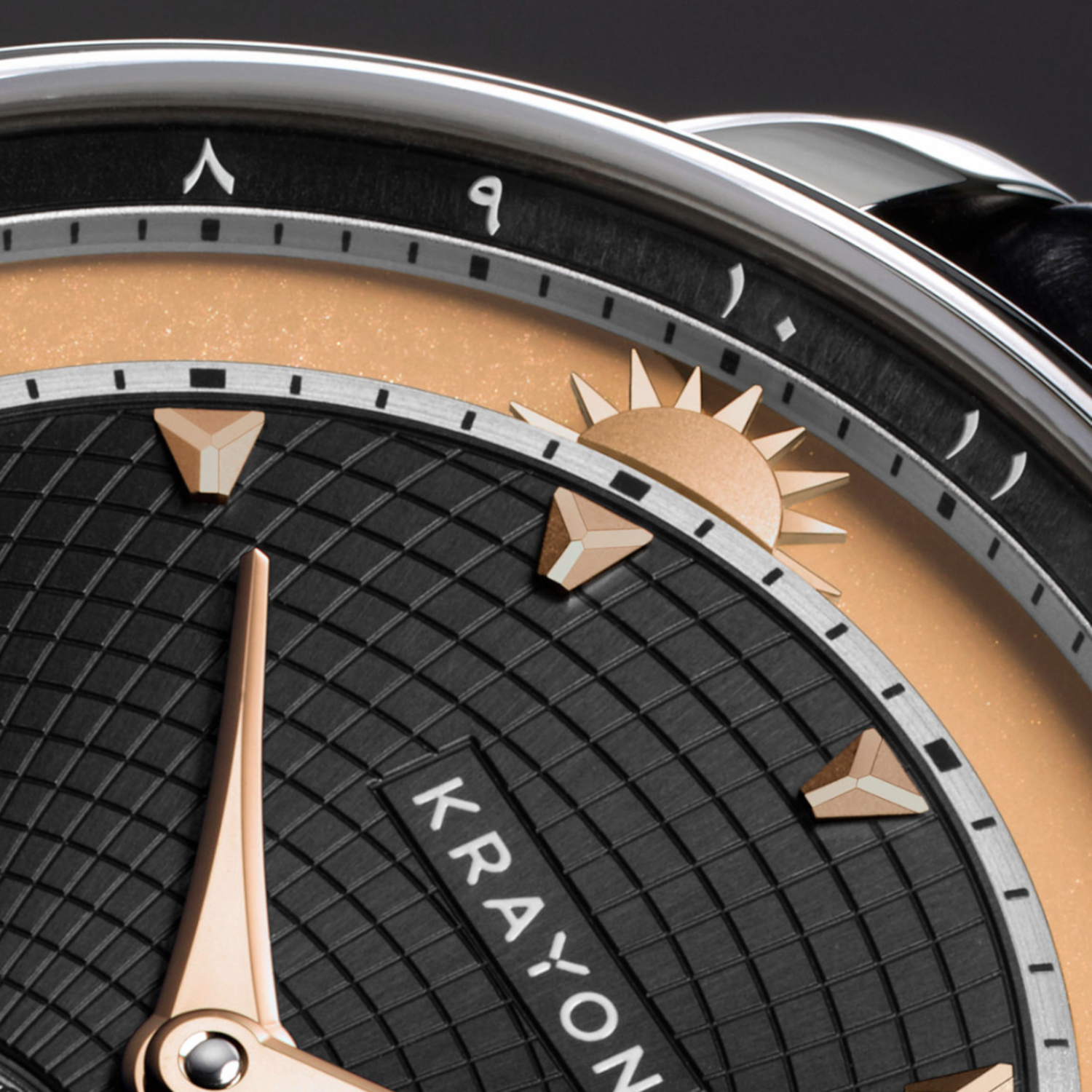
Classique Phase de Lune 7137
The Art of Classical Watchmaking
Few watchmakers have shaped the history of horology as profoundly as Abraham-Louis Breguet. More than two centuries after its founding, the Maison continues to define timeless elegance through creations that unite technical mastery with artistic refinement. The Classique Phase de Lune 7137 is among the purest expressions of that enduring legacy.
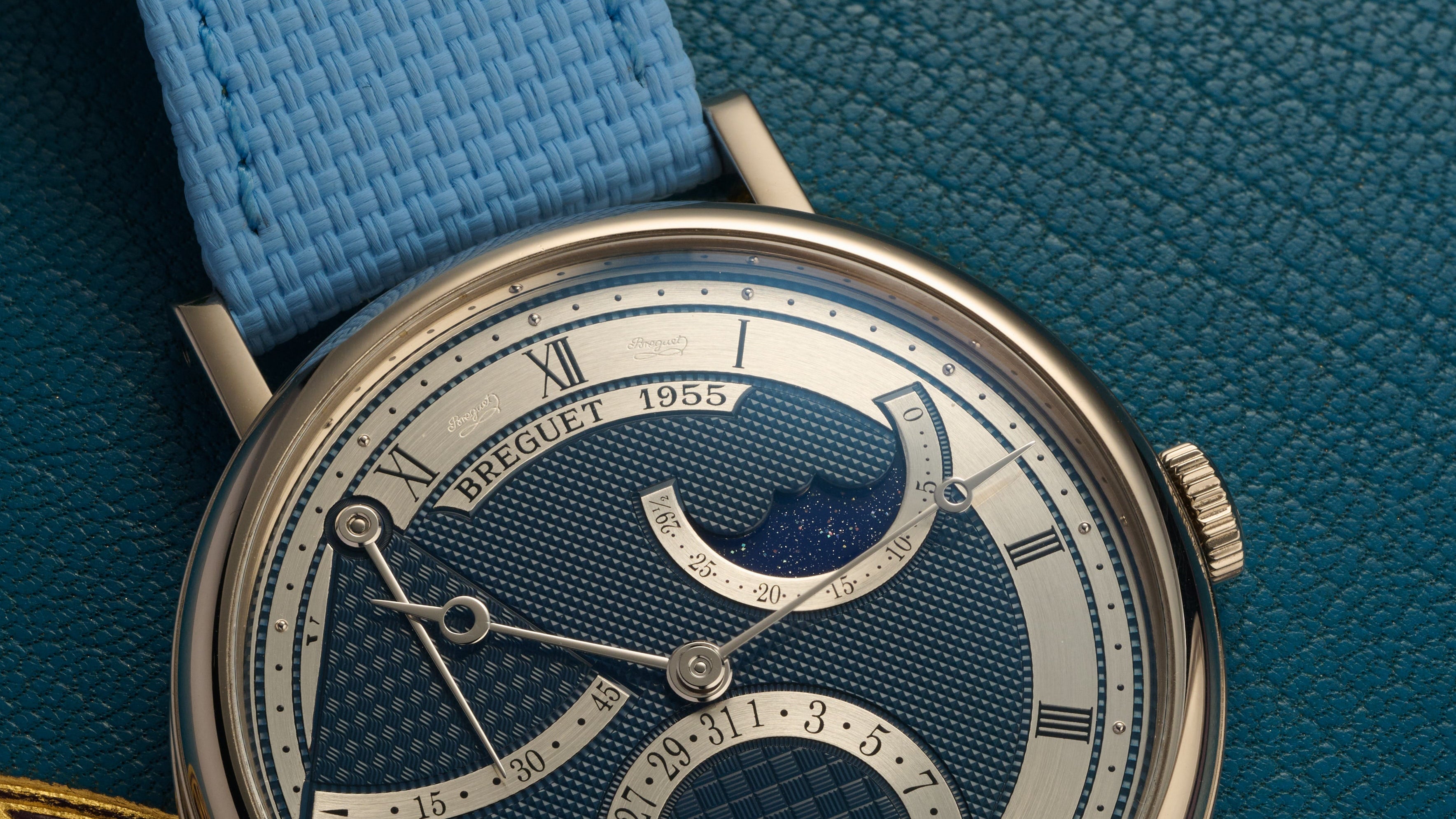
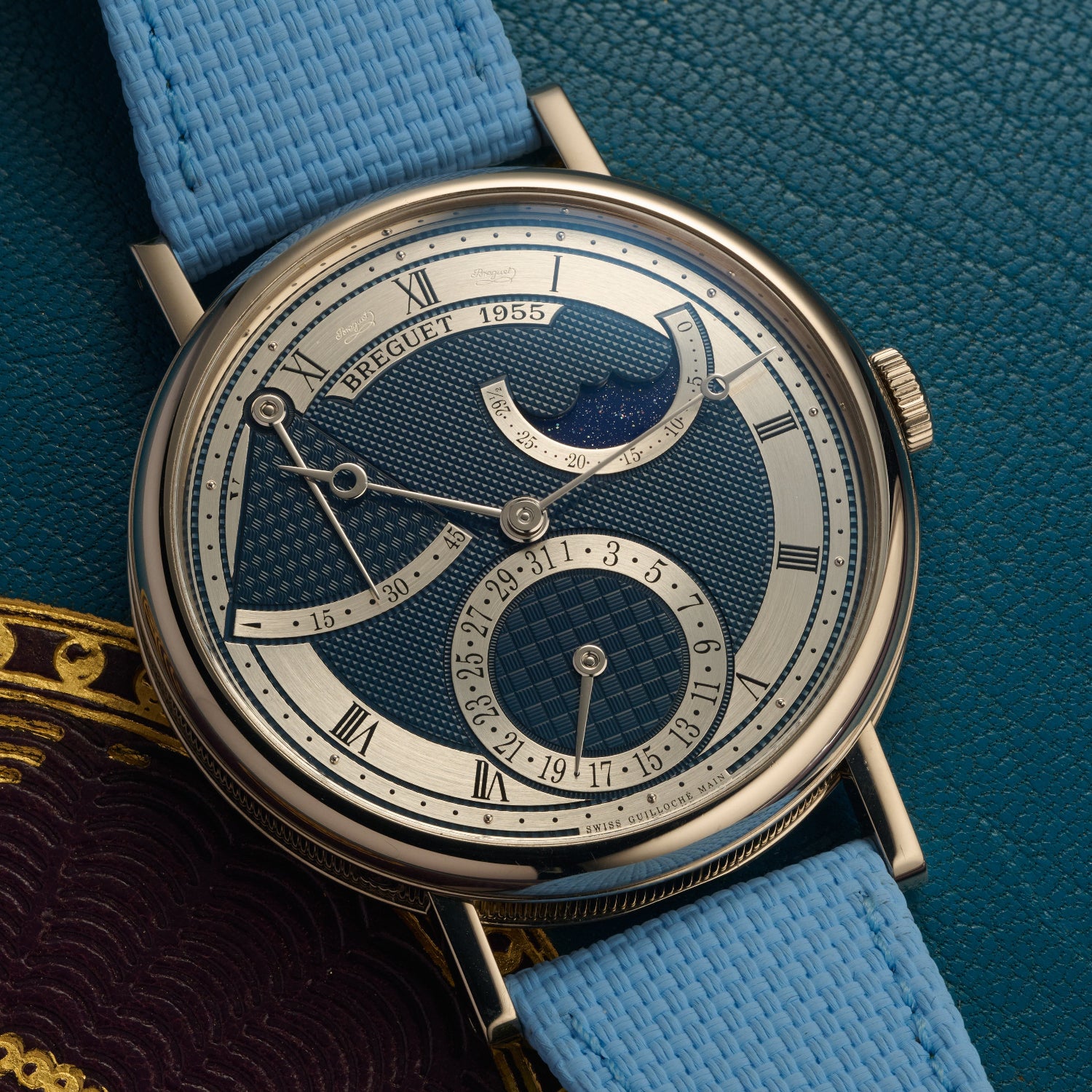
Crafted in 18-carat white gold, the 39 mm case frames an extraordinary hand-guilloché gold dial finished in a captivating sky-blue tone. Executed entirely on traditional rose engines, multiple guilloché patterns elegantly distinguish the watch's indications - from the power reserve display and date to the beautifully executed moon phase - creating remarkable depth while remaining perfectly balanced. The iconic blued open-tipped Breguet hands and Roman numerals complete a dial that is unmistakably Breguet.
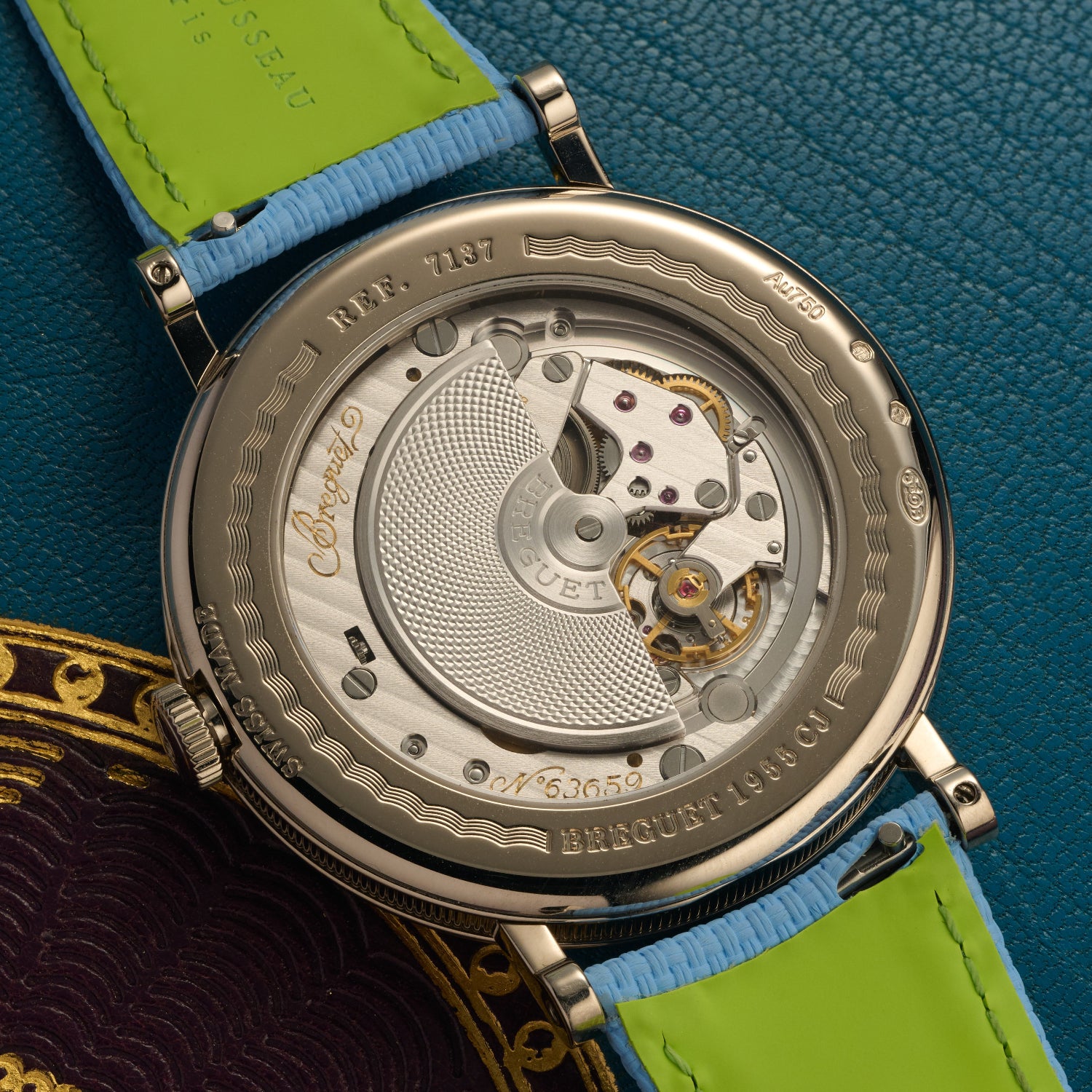
Powering the watch is the ultra-thin automatic Calibre 502.3 DR1, a movement measuring just 3.6 mm in height. Equipped with a silicon balance spring for enhanced precision and resistance to magnetism, it offers a 46-hour power reserve while remaining beautifully finished throughout. Visible through the sapphire caseback, the movement features a hand-guilloché solid gold oscillating weight - another testament to Breguet's commitment to traditional craftsmanship.
Elegant, technically sophisticated, and unmistakably classical, the Classique Phase de Lune 7137 perfectly embodies the philosophy that has defined Breguet for generations. It is a watch where every detail—from its hand-turned guilloché dial to its poetic moon phase - celebrates the enduring beauty of traditional haute horlogerie.
Technical Information
Case diameter:
39 mm
Case thickness:
8.7 mm
Case Material:
18K white gold
Movement:
502.3 DR1, Automatic
Lens:
Sapphire case back
Strap:
Alligator
Water-resistance:
3 ATM
Country of Manufacture:
Switzerland
Color:
Bleu sky, Hand-guilloché
ABOUT
MONTRES BREGUET
The Foundation of Modern Watchmaking
Founded in Paris in 1775 by Abraham-Louis Breguet, Breguet is universally regarded as one of the most influential names in the history of horology. More than two centuries later, the Maison continues to embody the perfect balance between technical innovation, artistic refinement, and timeless elegance. Countless inventions introduced by its founder remain fundamental to mechanical watchmaking today, making Breguet not merely a historic brand, but one of the very pillars upon which modern haute horlogerie was built.
A Legacy of Innovation
Abraham-Louis Breguet transformed watchmaking through a series of revolutionary inventions that forever changed the industry. From the patented tourbillon and the first practical self-winding watches to pioneering shock-protection systems and the world's first wristwatch created for the Queen of Naples, his innovations established new standards for precision and reliability. His extraordinary clientele—including Marie Antoinette, Napoleon Bonaparte, Tsar Alexander I, Winston Churchill, and Queen Victoria—cemented Breguet's reputation as the watchmaker of royalty, statesmen, and visionaries.
Timeless Design
Breguet's unmistakable aesthetic has become one of the most recognizable signatures in watchmaking. Hand-guilloché dials, elegant fluted casebands, blued pomme hands, secret signatures, and refined Roman numerals continue to define the Maison's creations. Every detail reflects a philosophy where beauty is never ornamental alone, but always serves precision, legibility, and mechanical harmony.
Mechanical Excellence
At the heart of every Breguet timepiece lies an in-house movement that combines centuries of traditional craftsmanship with modern technical innovation. Meticulously hand-finished and often incorporating advanced materials such as silicon, these calibres uphold the Maison's relentless pursuit of chronometric performance while preserving the artisanal finishing that has distinguished Breguet for generations.
An Enduring Icon
Today, Breguet remains one of the world's most prestigious manufactures, continuing the legacy established by its visionary founder over 250 years ago. Every timepiece reflects an unwavering commitment to innovation, craftsmanship, and elegance, offering collectors not simply a watch, but a direct connection to the origins of modern watchmaking and one of the greatest legacies in horological history.